Halfway through your workout, in the middle of a really good set, you’re feeling strong, you’re in your groove, and suddenly you realize you’ve leaked a small amount of urine during a jump, a jog, while you’re lifting weights, or even while you’re sneezing between sets.
It may seem trivial. But it can dampen your confidence and throw up the doubt in your mind of whether or not you should exercise on those days. In fact, you’ll even shy away from some workouts.
What many people aren’t aware of is that the pelvic floor weakness that contributes to pelvic floor dysfunction also causes urinary leakage during exercise. The even better news is that you are not alone and it can often be fixed.
You don’t just have to accept exercise leakage. By knowing what causes it and understanding how your pelvic floor works, you’ll find a way to exercise without the leakage.

Pelvic floor your pelvic floor is made up of muscles and connective tissue that holds up your bladder, bowel, and other organs in your pelvis. Those muscles also allow you to hold in urine and play a part in helping you stay steady and balanced.
Jumping, running, lifting, abdominal exercises and all other forms of exercise elevate pressure in your abdomen. Your pelvic floor works with your breathing and other muscles to help control that pressure.
Urinary leakage during movement of the body (e.g. jumping running, standing, and stopping suddenly) may occur when the pelvic floor muscles can no longer be relied upon to help manage these changes in pressure.
This is sometimes referred to as “stress urinary incontinence”.
Again, this isn’t always the case, although the term can be misleading stressing urination is when physical stress increases pressure on the bladder and causes leakage.
You will notice there is an immediate and involuntary leakage of urine whenever you exert pressure on your bladder in case you have this condition. It’s quite common to have an episode of exercise, a condition that will cause this, but this is not always the reason behind this.
You may notice leakage when:
There are those that get leaks rarely or perhaps only on specific activities. And for some, they find that they leak more often all throughout the day.
Urinary incontinence can occur in people of any age and with any activity level, yet pregnancy and delivery, as well as hormonal changes and specific conditions affecting the pelvic health, may be a factor.
One common misconception is that urinary leakage automatically means your pelvic floor muscles are weak.
While reduced muscle strength can contribute to bladder control problems, it isn’t the only possible reason.
Your pelvic floor muscles also need to relax, contract, and coordinate appropriately. Muscles that are excessively tense or unable to relax properly may also contribute to pelvic health symptoms.
Other factors that may play a role include:
Poor muscle coordination: Your pelvic floor may not contract at the right time when you cough, jump, run, or lift weights.
Breathing patterns: Holding your breath during exercise or lifting can affect how pressure is managed throughout your core and pelvic floor.
Changes after pregnancy or childbirth: Pregnancy and delivery can affect pelvic floor muscle function, potentially contributing to leakage during physical activity.
Changes in physical activity: Returning to intense exercise after a break or suddenly increasing workout intensity may expose difficulties with managing physical demands.
This is why performing more Kegels isn’t necessarily the right answer for everyone. The appropriate approach depends on whether your pelvic floor needs strengthening, improved relaxation, better coordination, or a combination of these.

If you’re leaking while working out, our urinary incontinence physical therapy can help you discover why.
It takes a step further than just attempting to prevent the leakage. Pelvic floor rehab considers your muscle function and how your body reacts to movement.
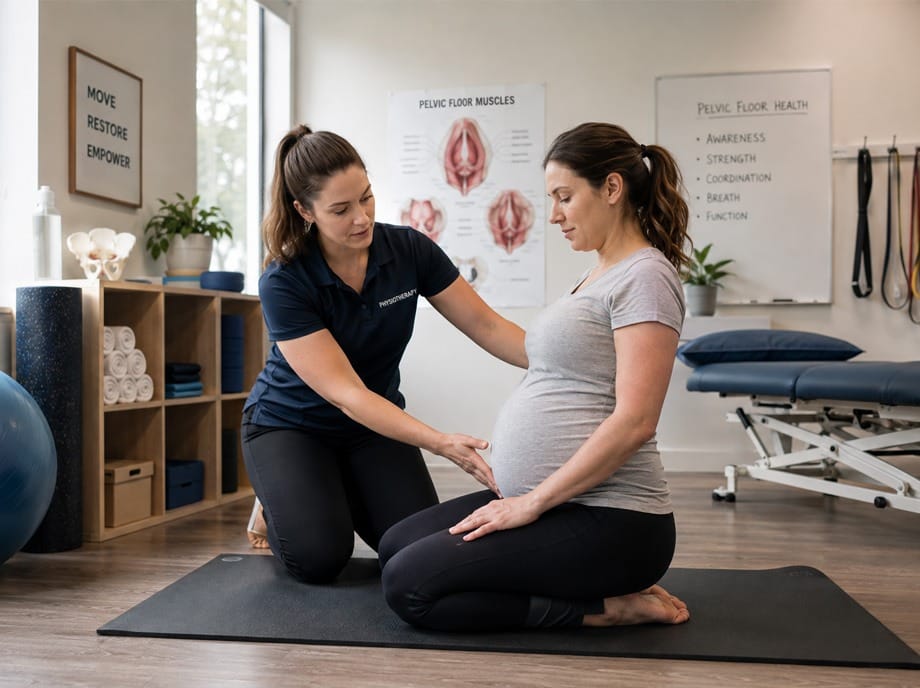
A pelvic floor physical therapist will be able to review your symptoms and medical history, analyze your movement patterns, breathing, and use their hands to check how well your pelvic floor muscles are functioning.
With your permission, we may also perform an internal pelvic floor exam, if clinically indicated. You can always tell your therapist how comfortable you are with the examination.
Based on the findings, your treatment plan may include the following:
If your pelvic floor muscles have reduced strength or endurance, your therapist may recommend targeted exercises to improve their ability to support the bladder and respond to physical demands.
These exercises are individualized rather than based on a one-size-fits-all routine.
Your pelvic floor needs to respond at the right time during movement. Therapy may focus on coordinating pelvic floor contractions with breathing and activities such as lifting, jumping, and changing positions.
If your pelvic floor muscles are overly tense, treatment may focus on relaxation, breathing, and improving muscle control rather than simply strengthening them.
Learning when to contract and when to relax is an important part of healthy pelvic floor function.
Your therapist may help you understand how breathing, posture, and movement influence pressure through your abdomen and pelvic floor.
This can include learning how to breathe during lifting, engage your core appropriately, and gradually progress through exercises without unnecessarily increasing strain.
The goal isn’t simply to help you avoid leakage during treatment sessions. It’s to help you return to the activities you enjoy.
Your rehabilitation plan may gradually incorporate movements such as squats, lunges, jumping, running, and other exercises relevant to your routine.
The right stress urinary incontinence treatment depends on the cause of your symptoms, their severity, and how they affect your daily life.
Some individuals may be advised to do pelvic floor muscle training. Others may need to learn relaxation exercises, breathing exercises, movement retraining and modifications to their exercise program.
A physical therapist can assist you in identifying, which ones are suitable after a physical assessment.
Another thing to consider is that urine leaks may not always be related to pelvic floor problems. Various other bladder and urine issues can mean similar symptoms. For new continuous progressive urine leakage or in the presence of pain, blood in the urine, difficulty urinating or any other symptoms of concern, seek the advice of a healthcare provider.
There’s no need to wait until urine leakage interferes with your daily routine.
Think about an assessment if you suffer from on a regular basis:
If you are looking for a pelvic floor specialist near me, you may want to find a pelvic health physical therapist to diagnose your symptoms and develop a specific treatment plan for you.
Exercise should leave you feeling confident, healthier, and more fit. Keeping active should not be ruled out because of urine leakage.
Welcome to Pulse Physical Therapy Clinic in Hinsdale, IL. Our pelvic health physical therapists take the time to get to know your symptoms and check the function of your pelvis to design a personalized treatment plan.
Whatever’s causing your leaking whether it’s during a workout, following pregnancy, or during daily life working with a pelvic floor specialist in Hinsdale can help you learn what’s going on and what options you have for treatment.
Don’t Wait to Seek treatment learn how our Physical therapist can help find an appointment near you. Getting relief from your symptoms and resuming your active lifestyle is just an appointment away! Schedule an appointment Today.
Get in touch with Pulse Physical Therapy Clinic to book an appointment and discover how pelvic health physical therapy can improve your recovery.
Urinary leakage during exercise is relatively common, but it isn’t something you have to accept as a normal part of working out. It may be associated with stress urinary incontinence or difficulties with pelvic floor muscle function. An evaluation can help identify possible contributing factors.
Yes. Pelvic floor physical therapy can help address contributing issues such as reduced muscle strength, poor coordination, or excessive muscle tension. Treatment is tailored to your assessment and symptoms.
Not necessarily. You may need to temporarily modify certain activities or adjust their intensity while addressing your symptoms. A pelvic health physical therapist can help you identify appropriate exercises and develop a gradual return-to-activity plan.
Not always. Kegels focus on contracting the pelvic floor muscles, but some people have difficulty relaxing or coordinating these muscles. Performing strengthening exercises without understanding the underlying issue may not address the problem. An individualized assessment can help determine the right approach.
Consider seeing a pelvic floor therapist if you regularly experience leakage during exercise, coughing, sneezing, or other everyday activities. You can seek an evaluation even if your symptoms are mild or occur only occasionally.